
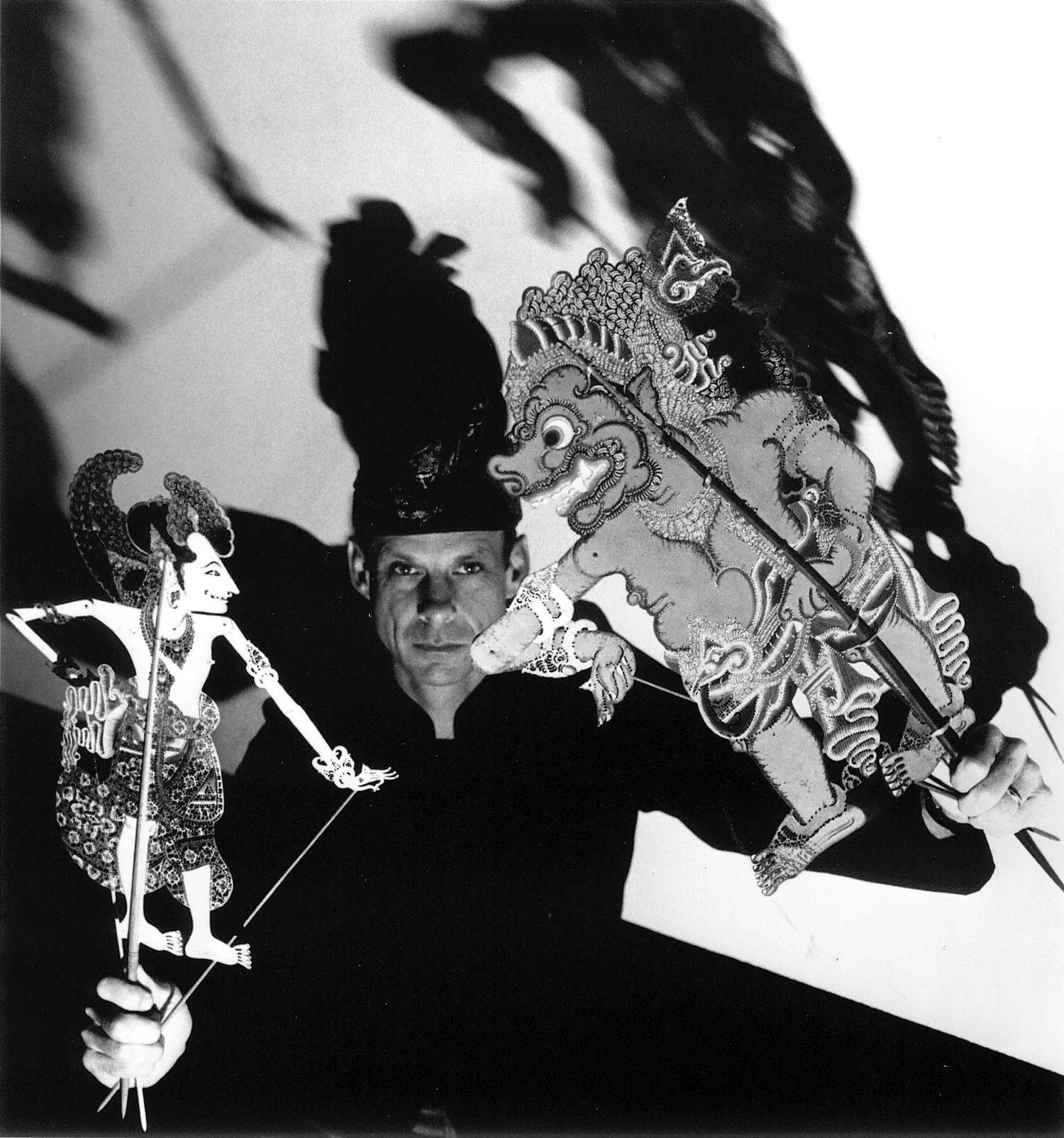
Larry Reed
1944 - 2026
It is with profound sadness that ShadowLight Productions shares that our founder and Artistic Director, Larry Reed, passed away peacefully at his home on January 30, 2026.
Charles Lawson Reed III - “Larry” to his many friends - brought ShadowLight Productions to life in 1972, creating a body of work that bridged traditional Balinese shadow theater with contemporary performance and stagecraft. As a director, filmmaker, teacher, and shadow master, he devoted his life to storytelling across cultures, collaborating with artists and communities around the world and creating works that expanded what shadow theater could be in the present day.
Larry’s creative life in the performing arts began when he was a small child cast in his first play, and grew in high school at Pomfret, becoming a life long path in the U.S. Peace Corps Theater Program. He was sent to Costa Rica, where he served as Assistant Director of the National Theater from 1966–68. He then headed to San Francisco to study film at the San Francisco Art Institute and became a core member of Anna Halprin’s Dancers’ Workshop, performing in the critically important Ceremony of Us (1969).
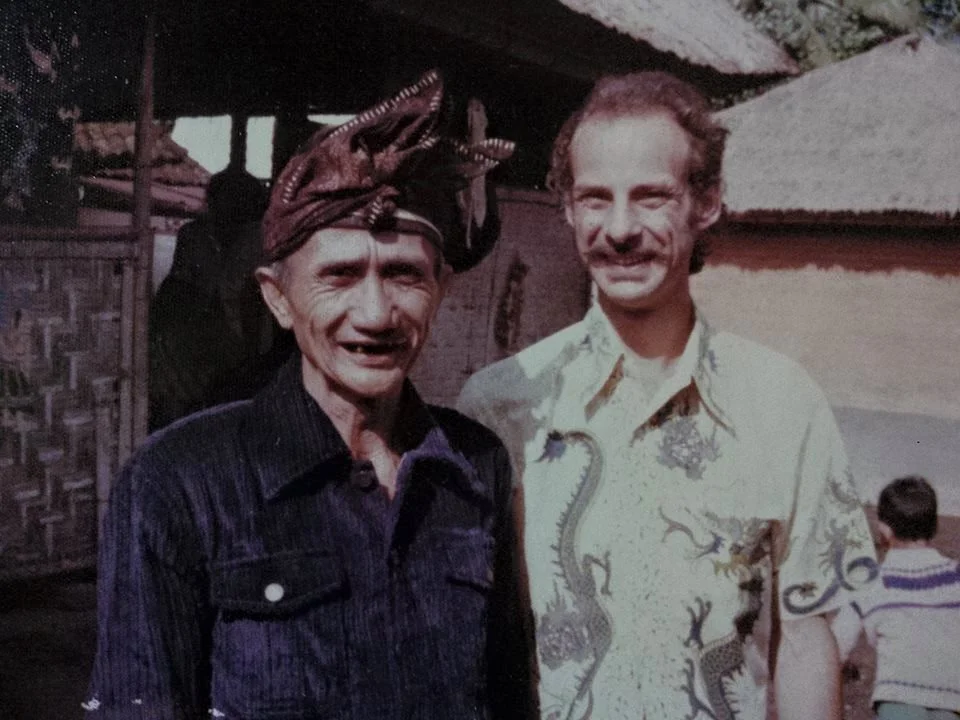
In 1970, seeking to study a non-Western language and culture, Larry made his first visit to Bali, where he encountered wayang shadow theater, an intensely transformative experience. Returning to California, he studied Balinese art, music, and dance at the Center for World Music. His first teacher, I Nyoman Sumandhi, invited him to return to Bali to study with his father, the respected dalang, or shadow master, I Nyoman Rajeg. Larry would study wayang intensively with Pak Rajeg for fifteen years, learning all aspects of this ancient artform - language, music, technique, and storytelling.
Larry founded Shadow Play Theater Company - later ShadowLight Productions - to bring traditional wayang to U.S. audiences. In hundreds of performances, accompanied by a traditional gamelan gender ensemble, he told stories from the Mahabharata in ancient Javanese court language, playing heroes, demons, maidens, and the servant-clown characters who translated for local audiences and improvised slapstick comedy.
In 1979, Larry filmed Shadow Master with filmmaker and friend John Knoop, a “dramatic documentary” about a family of dancers and shadow masters in Bali. Made before the onslaught of mass tourism, the film was shot with members of the local community as actors and co-creators. It later aired on PBS and the Discovery Channel.
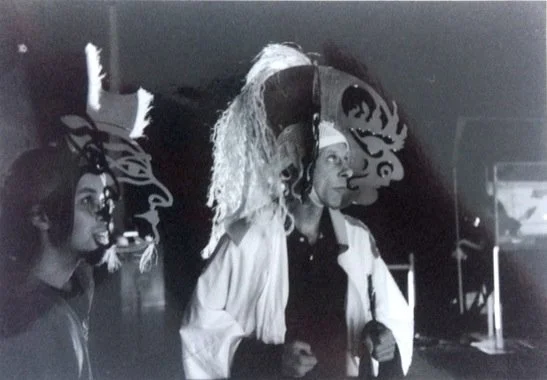
In the early 1990s, Larry entered the most productive and widely recognized period of his career as he began synthesizing traditional shadow theater with contemporary techniques to create a new kind of cinematic shadow theater for which ShadowLight Productions is known. Working with point-source lighting and a 30-foot-wide screen, he combined handheld puppets with 3D shadow masks, along with oversized slides projected as sets, and an innovative use of lighting and stagecraft.
Over the decades that followed, Larry would direct more than twenty original ShadowLight productions, with performers and collaborators far too many to name. His cinematic style gained recognition through early works such as In Xanadu (1993–97), which received a UNIMA Citation for Excellence (1993), puppetry’s highest award, Wild Party (1995) and Wayang Listrik (Electric Shadows, 1998), a production that returned to influence Indonesian performance traditions.
Reed’s work was guided by a mission to carry culture forward. Coyote’s Journey (2000) played a role in preserving the language and culture of the Karuk Tribe. Seven Visions of Encarnacion (2003) a search for cultural identity in a California mission and Ghosts of the River (2009), both written by Octavio Solis, told stories of migration across the Rio Grande.
Reed also continued to regularly perform traditional wayang to live audiences, including hybrid performances of The Tempest, a work he returned to about once a decade throughout his career. His most recent production, Chagall In His Own Words: An Invocation, premiered in Fall 2025. Meanwhile, ShadowLight’s education program introduced young people in the San Francisco Bay Area and beyond to writing and performing shadow theater. Reed was also working on his extensive archives and recording an oral history.
Reed’s work grew from deep study and exchange, with a respect for living traditions and a sense of responsibility to the people and cultures he learned from. He used shadow theater as a platform to lift up stories and artists too often excluded from Western theaters. He was a humanist - generous, funny, deeply well-read, and he loved learning languages, spending time with friends and family, preferably cooking and eating or learning to play the clarinet. He changed the lives of countless musicians, dancers, performers, students, and collaborators — and many artists working in puppetry and related forms — and his way of working continues in the community he created.
NYTimes: Larry Reed, Master of Shadow Puppetry, Dies at 81
Larry Reed, who turned shadows into epic theater in S.F., dies at 81
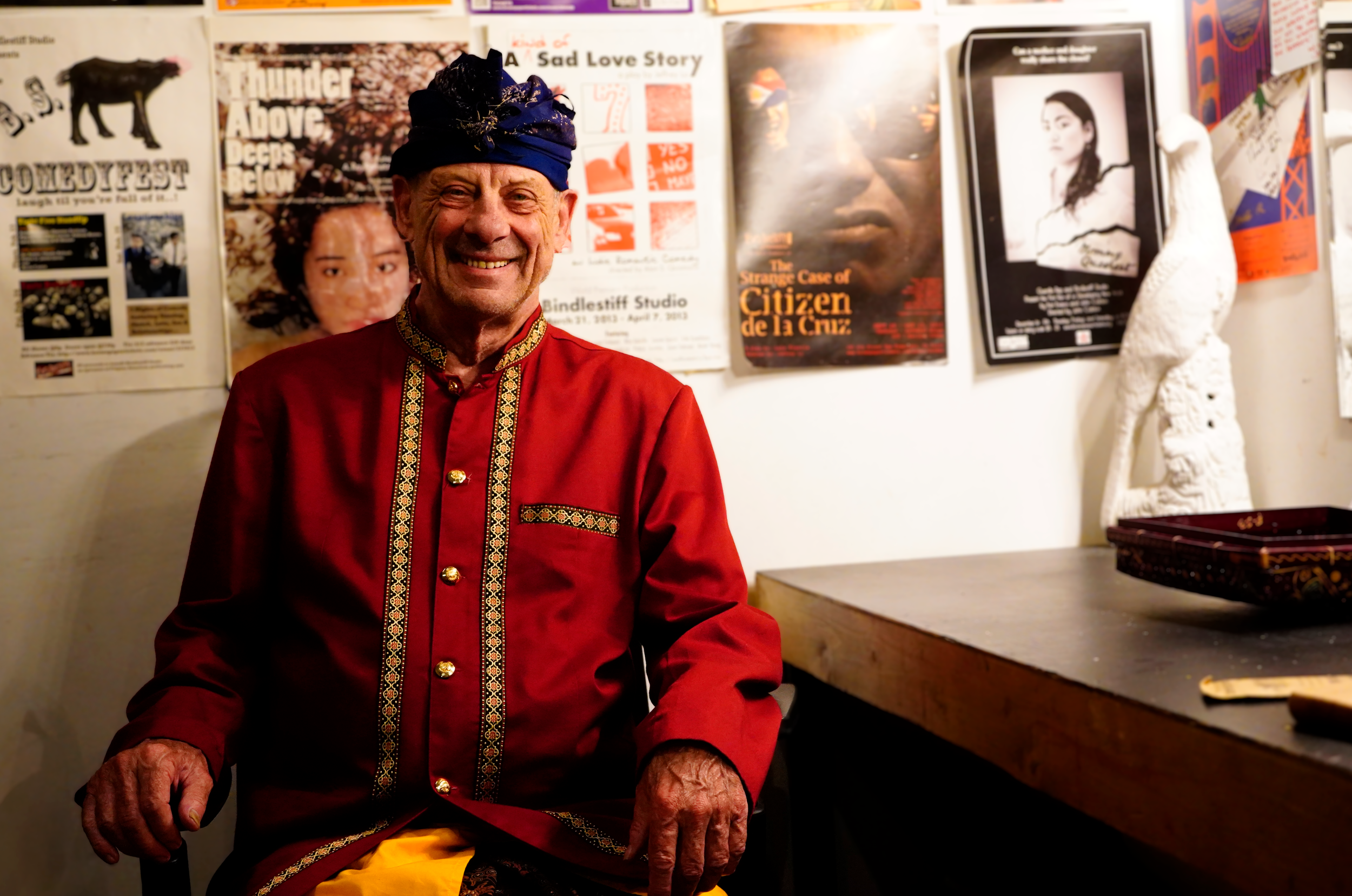
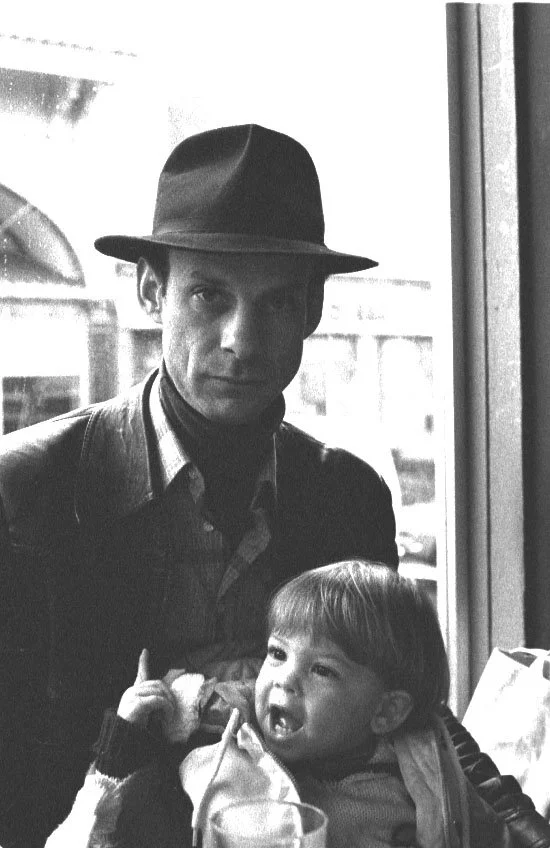
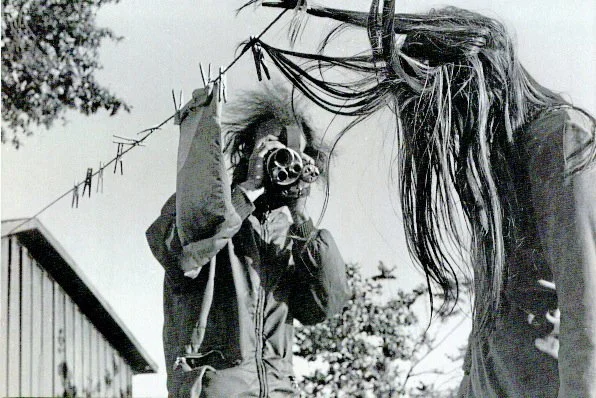
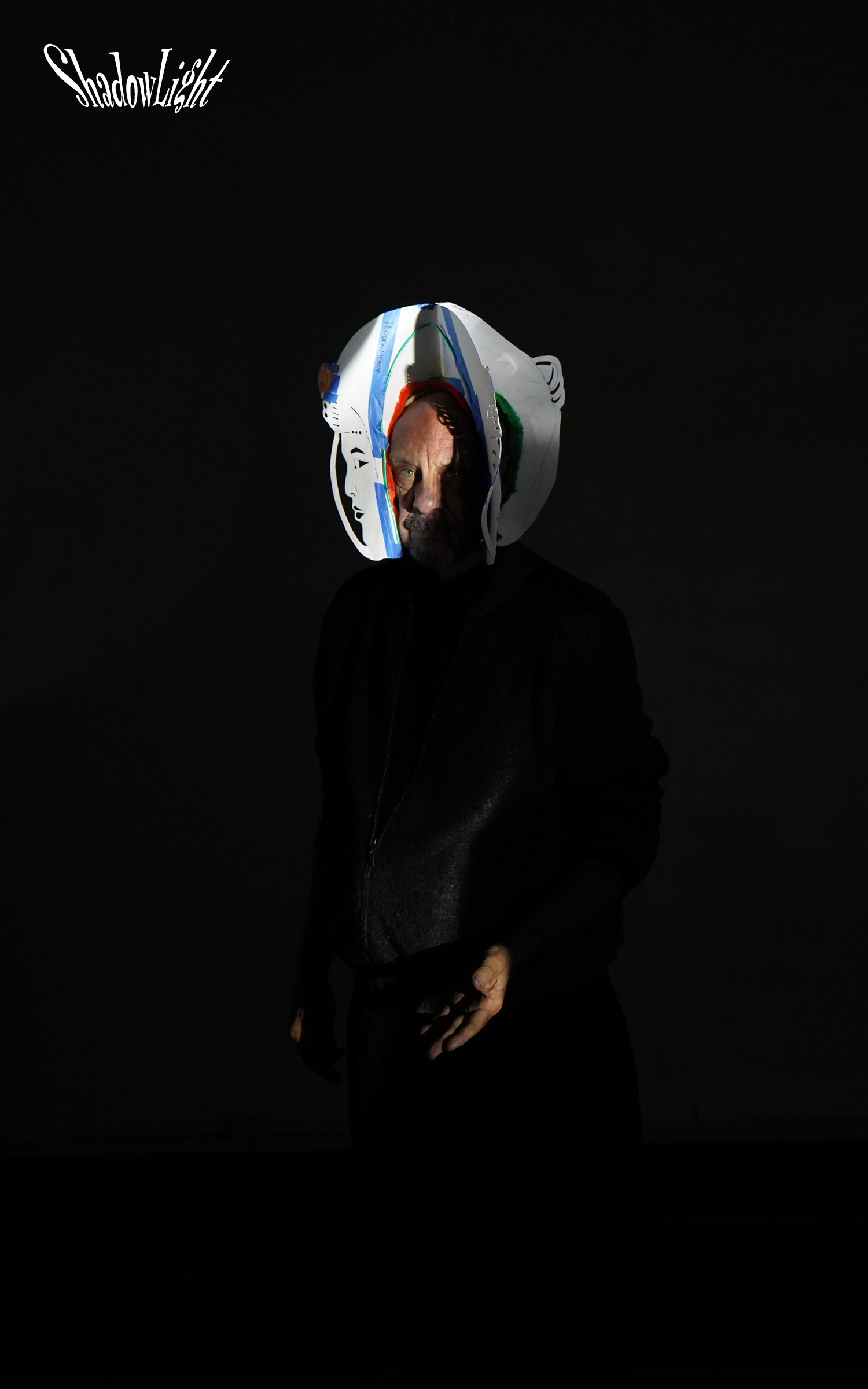
About Larry Reed
Larry Reed is a nationally and internationally acclaimed artist and a trailblazer in contemporary shadow theater. He is among the first Western artists to train extensively in traditional Balinese shadow theater (wayang kulit) and is a dalang (shadow master), performing with more than 20 carved leather puppets while simultaneously serving as conductor of the accompanying gamelan orchestra, director, and stage manager. Over the course of his career, Reed has performed more than 250 traditional shadow theater productions worldwide.
In the early 1990s, Reed entered a new phase of his artistic practice by inventing a groundbreaking shadow-casting method that integrates traditional shadow theater techniques with film, modern theater, and contemporary dance. This innovation became the foundation of what is now known as cinematic shadow theater.
Reed is also a multidisciplinary filmmaker, writer, and director. He has written, directed, and produced films in the United States and Mexico. Shadow Master (1979), his “dramatic documentary” about the family of a Balinese shadow artist, was broadcast nationally on PBS and the Discovery Channel. Earlier in his career, Reed served as Assistant Director of the National Theatre of Costa Rica and performed with Anna Halprin and the San Francisco Dancers’ Workshop during the 1960s.
Fluent in five languages, Reed has published articles and translations in Asian Theatre Journal, Schattentheater (Germany), and other international publications. He has received numerous awards and honors, including being named one of the Top 50 Artists in the San Francisco Bay Area by Metropolitan Magazine in 1995 and 1996.
Throughout his career, Reed has collaborated with a wide range of artists and institutions across theater, film, opera, dance, puppetry, and music. Notable collaborations include projects with American Conservatory Theater (The Tempest); Santa Fe Opera and LA Opera (Orfeo); Minneapolis Children’s Theatre (Whale); Mabou Mines (MahabharAnta); Mark Taper Forum (Freedom Song); Smuin Ballet (Ain’t Necessarily So); Ballet Austin (The Magic Flute); Lee Breuer (Peter and Wendy); Octavio Solis (7 Visions and Ghosts of the River); Puppet & Its Double of Taiwan (Monkey King at Spider Cave); Taiyuan Puppet Theatre Company and Cengiz Ozek (Silk Road); Karen Kandel, Coco Zhao, and Wu Na (The Good-for-Nothing Lover); OKI (Poro Oyna); Hamid Rahmanian (Feathers of Fire); Flying Group Theatre of Taiwan (Dark Light); Paul Dresher and Eugenie Chan (Sojourner ZY) among many others.