

Overview
Exhibition at the Ballard Institute and Museum of Puppetry
November 6, 2026 – March 7, 2027
The exhibition Larry Reed: Cinematic Shadows brings together archival materials, original theatrical objects, and video documentation of Larry Reed’s work.
The first room traces Reed’s early artistic development, his introduction to Balinese wayang, and his subsequent study and performance of this traditional form through the Shadow Play Theater Company. The second room features materials from his cinematic shadow productions with ShadowLight Productions, including In Xanadu. It also documents his return to Bali, where he introduced his cinematic techniques to local artists through Wayang Listrik (Electric Shadows).
On display are photographs, posters, ephemera, original shadow puppets, three-dimensional shadow masks, oversize handmade scenery slides, lighting equipment and other shadow theater stagecraft, along with videos of ShadowLight productions and oral history interviews. Two theatrical installations feature Larry’s original Balinese wayang screen and puppets, and a large-scale, interactive cinematic shadow theater screen where visitors can experiment with Reed’s techniques. The exhibition draws on production materials acquired by the Ballard Institute, and archival and theatrical materials acquired by the Center for Puppetry Arts in Atlanta.
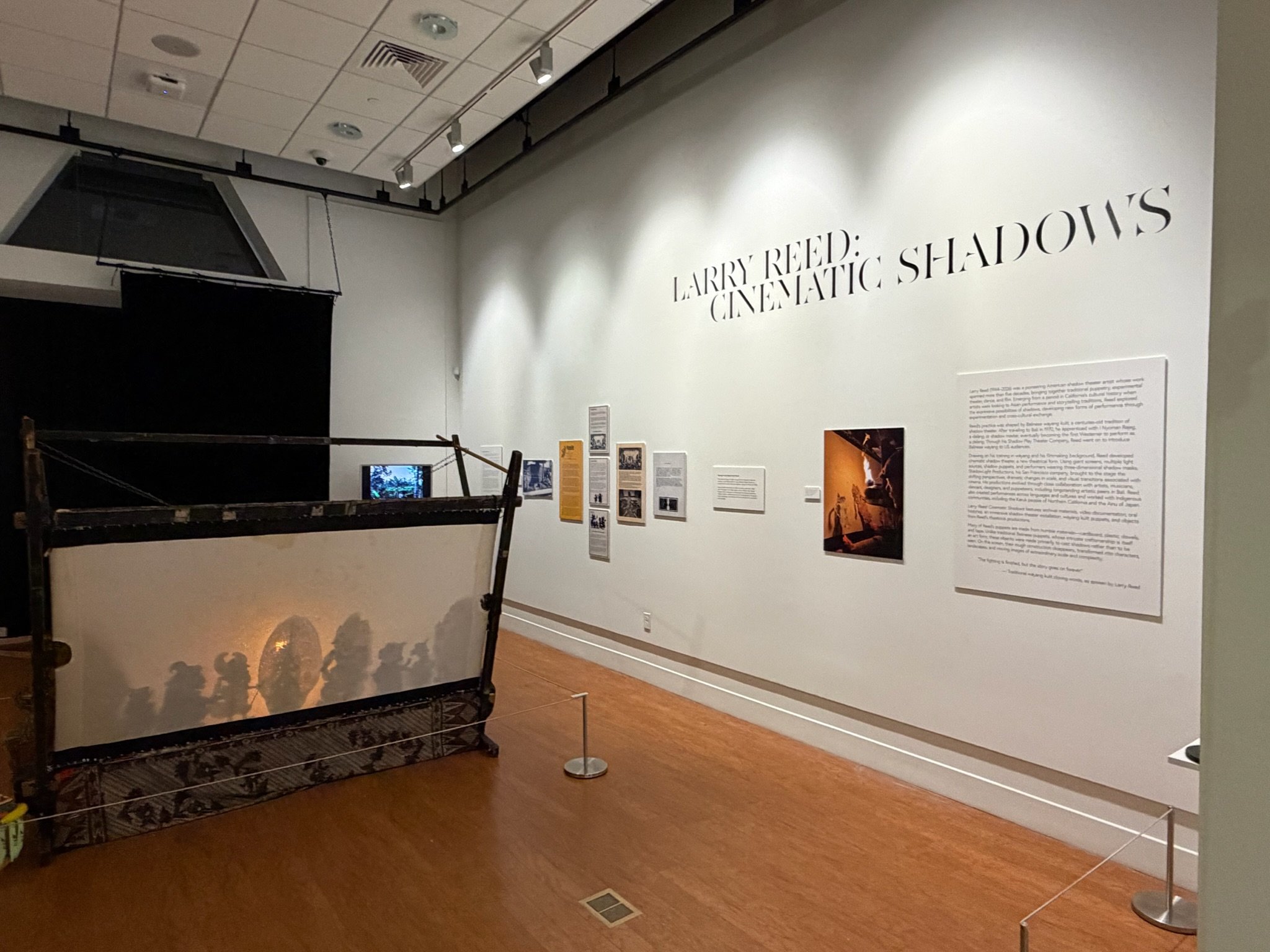
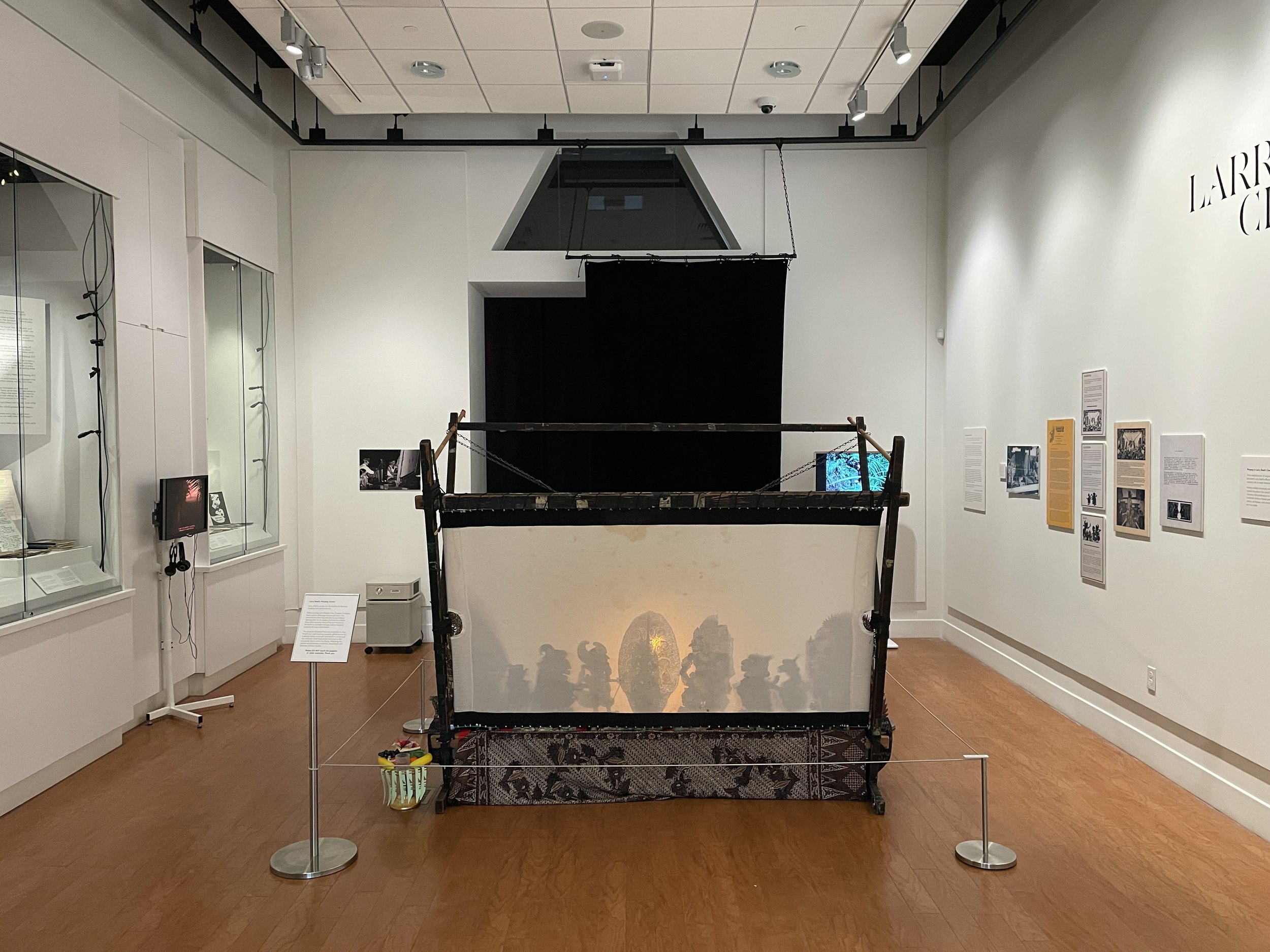
Front Gallery Installation View with Wayang Screen, Glass Cabinets, Monitors, and Texts
LARRY REED: CINEMATIC SHADOWS
Larry Reed (1944–2026) was a pioneering American shadow theater artist whose work spanned more than five decades, bringing together traditional puppetry, experimental theater, dance, and film. Emerging from a period in California’s cultural history when artists were looking to Asian performance and storytelling traditions, Reed explored the expressive possibilities of shadows, developing new forms of performance through experimentation and cross-cultural exchange.
Reed’s practice was shaped by Balinese wayang kulit, a centuries-old tradition of shadow theater. After traveling to Bali in 1970, he apprenticed with I Nyoman Rajeg, a dalang, or shadow master, eventually becoming the first Westerner to perform as a dalang. Through his Shadow Play Theater Company, Reed went on to introduce Balinese wayang to US audiences.
Drawing on his training in wayang and his filmmaking background, Reed developed cinematic shadow theater, a new theatrical form. Using giant screens, multiple light sources, shadow puppets, and performers wearing threedimensional shadow masks, ShadowLight Productions, his San Francisco company, brought to the stage the shifting perspectives, dramatic changes in scale, and visual transitions associated with cinema. His productions evolved through close collaboration with artists, musicians, dancers, designers, and puppeteers, including longstanding artistic peers in Bali. Reed also created performances across languages and cultures and worked with Indigenous communities, including the Karuk people of Northern California and the Ainu of Japan.
Larry Reed: Cinematic Shadows features archival materials, video documentation, oral histories, an immersive shadow theater installation, wayang kulit puppets, and objects from Reed’s theatrical productions.
Many of Reed’s puppets are made from humble materials—cardboard, plastic, dowels, and tape. Unlike traditional Balinese puppets, whose intricate craftsmanship is itself an art form, these objects were made primarily to cast shadows rather than to be seen. On the screen, their rough construction disappears, transformed into characters, landscapes, and moving images of extraordinary scale and complexity.
“The fighting is finished, but the story goes on forever.”
— Traditional wayang kulit closing words, as spoken by Larry Reed